RESEARCH
·
The Strait of Hormuz
A meaningful share of the world's oil flows through the Strait of Hormuz, and the current stalemate with Iran is pushing inflation anxiety back into markets and portfolios. This week's edition breaks down what rising energy costs mean for investors, why honesty about your positioning matters more than prediction, and what you can actually control when the world gets more expensive. A grounded look at geopolitical risk, discipline, and clarity for long-term investors.

Tom Stadum
4 min read

From Fjell Insights.
Fjell Capital
Category
tmrw
Share
At the center of every asset price is a simple idea: what do we believe the future is worth today?
That answer changes when the world becomes more unstable, when inflation rises, when capital gets more cautious, and when the cost of uncertainty goes up. And that brings us straight to what is happening in the Strait of Hormuz.
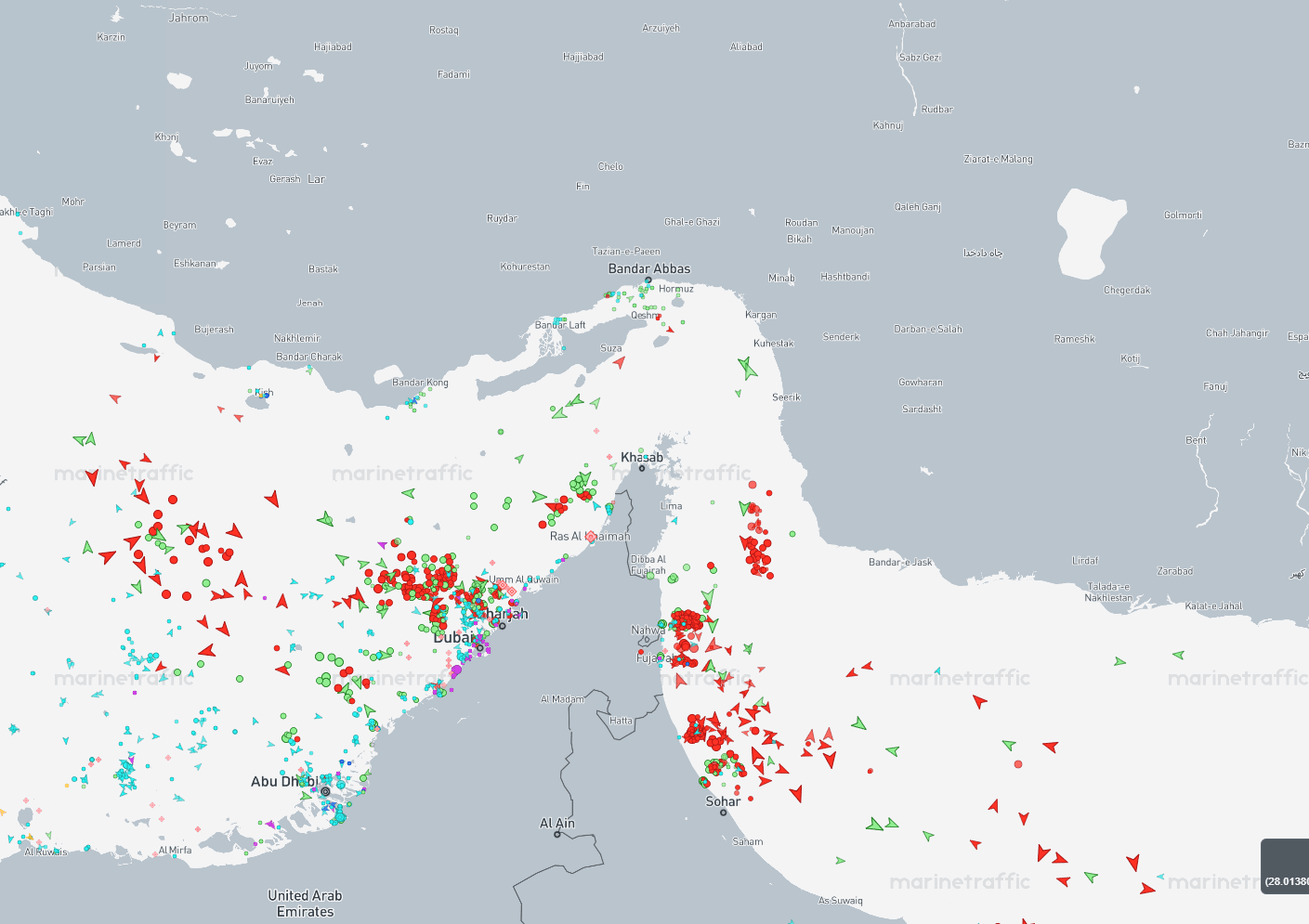
Screenshot of Marine Traffic at 9am CT 3/26/26
I filled up my car this past week, reluctantly, as I am sure you did. My tank was low, I pulled into the gas station, and standing there at the pump was a feeling every adult knows well: irritation mixed with helplessness. I watched the numbers climb, heard the click, looked at the screen, and thought, well, that’s unfortunate.
Now thankfully, an extra twenty dollars at the pump is not going to break me. It probably is not going to break you either. But that’s not really the point. The point is that fuel, and oil, is essential infrastructure for almost everything. It moves goods, powers supply chains, supports daily life, and when the cost of energy rises, the effect spreads quickly.
That is inflation in the real world. Not the one stored in your memory bank or the textbook version. The lived version.
It shows up at the pump, in the grocery aisle, at dinner with your family, and eventually in markets.
And that is what makes inflation so frustrating. You did not ask for it. You did not cause it. You do not get to opt out of it. You just wake up and realize the world got more expensive again.
Here’s the state of things. A meaningful share of the world’s oil flows through the Strait of Hormuz, roughly one‑fifth of global supply on a typical day. As you saw in the photo above, there’s a backlog of ships on either side, just waiting This scenario economists have debated for decades is no longer theoretical. Reports suggest Iran is demanding as much as $2 million per voyage from some commercial ships to pass through, an informal toll on “neutral” traffic. Ships that are not seen as neutral face higher risk and delay, with some vessels idling or rerouting via ports in Qatar and the UAE. That stall, and its economic consequences, are finding their way into markets and your portfolio.
And while inflation could flare up from here, events like this are a forcing function for something every investor needs a dose of: honesty.
As the theoretical becomes reality, the market is posing questions to you and me about what we really believe and what we are and aren’t willing to move off of.
Honesty is one of the few gifts a declining market can give you, if you are willing to receive it.
There was a headline this week about inflation picking back up from its recent 2.4% reading, with forecasts pointing toward roughly 3% as energy prices rise. If that becomes the path from here, Fed policy will likely shift, the housing market will likely stay locked up for young first-time hopeful buyers, the AI rollout will still be headstrong, but the cost of capital will likely remain higher than the previous cycle.
Not what does this mean for the world.
What does this mean for me?
The disciplined investor is doing something different right now. They are forcing honesty on their current positions, looking at what they own, why they own it, and whether that positioning still makes sense in a world where inflation may reaccelerate, policy may stay tighter for longer, and geopolitical risk is heightened once again. We wrote about what this means for you earlier this year.
But they are also looking for opportunity. Not blindly, and not because every dip deserves an indiscriminate buy. When prices move and fear rises, the next set of questions matters. Has anything fundamentally changed here? Is this weakness temporary or structural? Are we being offered a better long-term entry point than we had a month ago?
And underneath all of it, they are walking through the range of outcomes. Not because prediction is the job, but because preparedness is. If inflation proves sticky, if the Fed stays tighter, if geopolitical stress lingers, what does that mean for liquidity, valuations, behavior, and the way capital should be positioned from here?
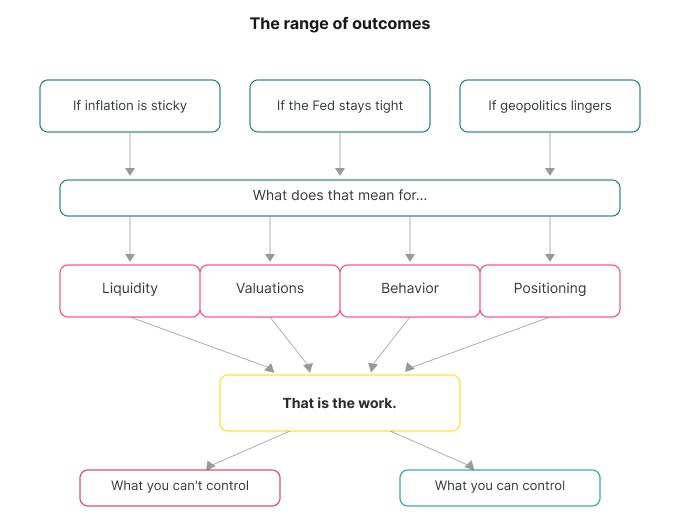
That is the work.
You are likely finishing up your taxes and getting ready for spring and summer. A fresh round of inflation anxiety was probably not on your list this month. But here we are.
When markets get more volatile, they have a way of calling all of us back to the table. Back to our assumptions. Back to our exposures. Back to the question of whether our financial life is built to handle a world that is less stable than we hoped.
You cannot control the Strait of Hormuz. You cannot control oil prices. You cannot control inflation prints or Fed decisions.
But you can control your liquidity. You can control your discipline. You can control the quality of what you own, the level of risk you are taking, and whether your plan can hold up under pressure.
That is where clarity lives. And in markets like this, clarity matters more than ever.
Tom Stadum
Sources & method
Originally published in Fjell Insights.
Written by
Tom Stadum
Founder, Wealth Advisor
Tom is the third generation of the practice that started in 1961. He spent seven years at UBS Financial Services as a Senior Vice President in wealth management before co-founding Fjell Capital in August 2020. He chairs the firm’s investment committee and works directly with client families.
Contact
KEEP READING
More from the archive
Stocks One Year After the Fed Started Hiking
The S&P 500 was higher one year after six of seven completed Fed tightening cycles since 1983. The median gain was 4.4%.
READ
The Treasury Tripled the Size of Its Buybacks
The federal government owes just over $40 trillion, and Treasury has tripled the size of a long-end bond buyback operation as borrowing costs rise.
READ
Apple Added $4.3 Trillion Under Tim Cook
Apple was worth $349 billion when Tim Cook became CEO and $4.66 trillion when he stepped down fifteen years later.
READ
tmrw, delivered straight to your inbox.
One letter a week, and the charts on Tuesdays. No sales material, and no list sharing. Unsubscribe in one click.
Like what you are reading?
Let’s talk about it.
If something we published applies to your own situation, that is the right reason to call.
See if you are a fit
Educational content only. Nothing published here is personalized investment, legal or tax advice, a recommendation of any security, or an offer to buy or sell. Views are as of the date of publication and are not updated. Past performance does not guarantee future results.